
California’s Literacy Reset: How AB 1454 and IMSE Are Shaping the Future of Reading Instruction


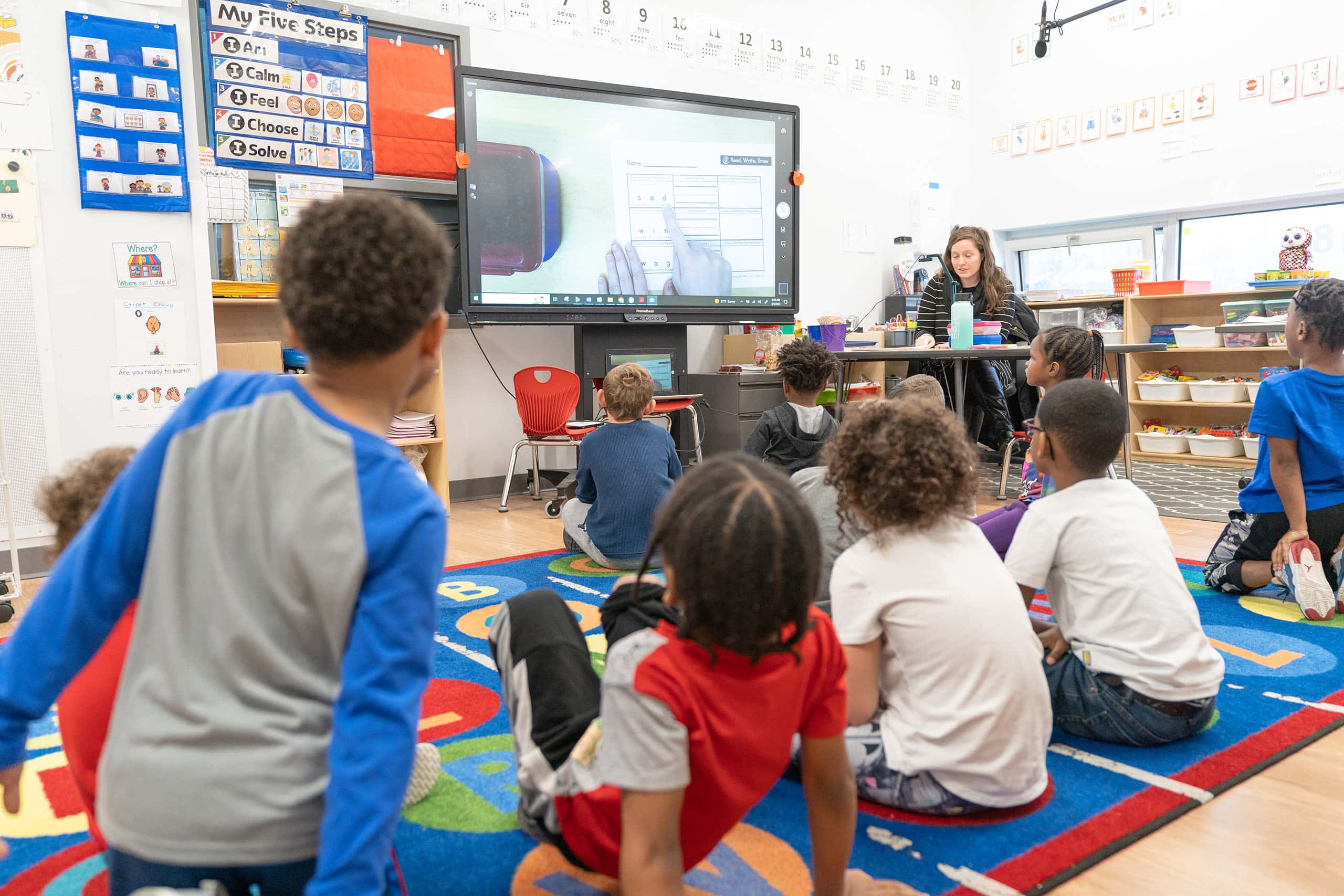
California is at a historic crossroads in literacy education. Assembly Bill 1454 (AB 1454), currently advancing through the legislature, represents one of the most comprehensive efforts the state has ever undertaken to ensure that every student learns to read using approaches grounded in the science of reading.
By mandating coherence across preparation, training, and materials, AB 1454 ensures that California educators are not left to piece together their own patchwork solutions. Instead, they will have a statewide framework that matches what decades of cognitive science have confirmed: reading is not a natural process, but one that must be explicitly and systematically taught. The bill requires that:
- Teacher credentialing programs must prepare new educators to deliver reading instruction aligned with evidence-based practices.
- Professional development opportunities across the state must include the latest research on phonemic awareness, phonics, fluency, vocabulary, and comprehension.
- State-adopted instructional materials must align with structured, research-backed approaches.
This legislation represents a decisive move toward effective practices that many California districts—such as Poway Unified, Value Schools Charter, Cucamonga, and Riverdale Joint Unified—have already used to achieve dramatic improvements in student literacy.
IMSE Is Already Aligned with AB 1454
As California moves to implement AB 1454, districts are seeking solutions built on the evidence-based practices required under the law. IMSE’s Structured Literacy programs, grounded in decades of research and expertise, and enhanced with new supports, fit seamlessly into this framework.
1. Comprehensive Training + Ongoing Support
AB 1454 emphasizes professional development, but districts need more than a one-time training. IMSE’s model ensures that educators leave training with ready-to-use lesson plans, high-quality instructional materials, and the rationales behind the science of reading. More importantly, IMSE continues to support teachers after training, through coaching, consulting, refreshers, and implementation guidance. This sustained partnership aligns perfectly with the bill’s vision of preparing teachers not only with knowledge, but with long-term capacity to drive literacy gains.
2. Supporting California’s English Learners
With almost 20% of California students classified as English Learners (ELs), literacy solutions must address diverse linguistic needs. IMSE’s updated Orton-Gillingham Plus (OG+) program includes dedicated EL supports, ensuring that teachers can scaffold instruction for students who are developing literacy in both English and their home language. These features make it possible to explicitly teach phonemic awareness, phonics, and vocabulary while acknowledging the linguistic strengths EL students bring to the classroom. This alignment directly answers AB 1454’s call for inclusive, evidence-based instruction.
3. Supporting Transitional Kindergarten (TK)
California’s universal TK rollout adds thousands of younger learners to the state’s public schools each year, creating a huge demand for training and resources tailored to this population. IMSE’s new Pre-K Literacy Plus course is designed to build oral language, phonological awareness, and early print concepts through developmentally appropriate, multisensory activities. These early foundations are crucial for preventing later reading struggles and ensure that TK educators have structured resources aligned with the state’s new literacy requirements.
4. Turning Screener Data into Action
California has also mandated that all districts adopt a literacy screener, particularly to identify students at risk for dyslexia. While this will provide invaluable data, many districts may be left asking, “What’s the next step?” Through training and ongoing implementation support, IMSE equips educators not just to interpret data, but to translate it into targeted instruction. Teachers learn how to deliver small-group lessons, adjust pacing, and provide interventions that respond directly to student needs.
Proof in Practice: California Districts Succeeding with IMSE
While AB 1454 sets the stage for evidence-based literacy instruction, several California districts are already demonstrating what’s possible with IMSE’s Structured Literacy programs. Their results provide a preview of the measurable impact this legislation can deliver statewide.
1. Poway Unified School District
Poway Unified, a large district in Southern California serving 39,000 students across 26 elementary schools, invested in IMSE training for more than 400 general education and special education teachers due to gaps in foundational phonics and phonemic awareness
The results have been transformational. According to 2024–2025 i-Ready data:
- Kindergarten: Students performing on or above grade level jumped from 57% to 91% in one school year.
- First Grade: On- or above-grade-level readers increased from 36% to 84%.
- Second Grade: On- or above-grade-level readers rose from 54% to 85%, with a 141% increase in foundational skills.
2. Cucamonga School District
Cucamonga has embraced IMSE across its K–2 classrooms, training both teachers and intervention specialists. Leaders report a dramatic cultural shift. Teachers are no longer sending struggling students out for intervention; instead, they feel equipped to provide Tier 1 instruction that prevents gaps from forming in the first place. Reading scores indicate widespread improvement across the district:
- Kindergarten: Reading at or above grade level increased from 25% to 50%.
- First Grade: Reading at or above grade level rose from 34% to 51%.
- Second Grade: Even with only partial training, there was an improvement from 41% to 52%.
The impact has spread beyond district lines: surrounding districts have visited Cucamonga schools to see firsthand how structured literacy is transforming student outcomes. As one assistant superintendent shared, “When visitors see our first graders in action, they can’t wait to jump on board.”
3. Riverdale Joint Unified School District
Riverdale Joint USD, a small rural district where over half of the students are English Learners, demonstrates how IMSE can work in high-need contexts. All K–2 teachers, along with instructional aides, have been trained in IMSE’s OG+ program. Instructional aides now run small-group rotations using IMSE approaches like the three-part drill, dictation, and decodables
The payoff has been striking. In September 2024, only 19% of Riverdale first graders were at or above grade level. By May 2025, that figure had risen to 63%, with the share of students two grade levels below shrinking dramatically.
Teachers describe the model as transformative, not only closing achievement gaps but also reigniting their passion for teaching. One noted, “For the first time in my career, I feel successful teaching literacy. I wish I’d had this training years ago.”
4. Value Schools Charter
Value Schools, a free public charter school serving TK – 12 in Los Angeles, implemented IMSE’s OG+ program and hired two IMSE-trained reading specialists to reverse declining reading scores and provide ongoing support to teachers. This high-fidelity approach produced a remarkable improvement both in students’ reading ability and in school culture, with a 31% reduction in struggling students and a 14% increase in high-performing students during the 2023-24 school year.
A Partner for California
As California takes bold steps with AB 1454 to ensure that every child receives evidence-based literacy instruction, IMSE is ready to help. With proven results in districts across California already, IMSE’s Structured Literacy programs neatly align with the bill’s requirements, which will help districts not only comply with AB 1454 but also realize its ultimate goal: ensuring that every student in California learns to read confidently.
If you would like to learn more about IMSE’s work in California, please contact us at info@IMSE.com.
Like what you read?
Follow us on Social Media:
