
When Teachers Are Equipped, Futures Open: A Literacy Story from Rural Uganda


For more than 20 years, Joe Wakabi had a dream of returning to the Ugandan village where he grew up and creating a school that would offer students the education he never had access to. That dream became a reality when Joe and his wife, Emily Wakabi, an IMSE Practicum Supervisor and literacy educator, founded the Levites Academy, a secondary school serving an underserved rural community that had long been denied consistent, high-quality learning opportunities.
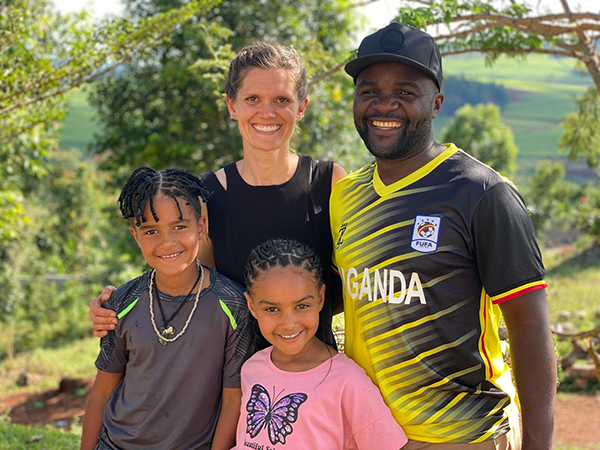
Today, The Levites Academy educates 126 students in grades 7–12, supported by 12 dedicated teachers. But like many schools across the globe, particularly in communities facing systemic barriers, the academy confronted a daunting challenge: how to help students learn when foundational literacy skills were missing.
A School Born From Community and Commitment
The Levites Academy was designed to serve adolescents who had experienced significant educational disruption, students whose schooling had been interrupted by poverty, limited resources, and, more recently, one of the longest COVID-related school shutdowns in the world.
Uganda’s schools were closed for nearly three full academic years. During that time, many students advanced grade levels without receiving explicit reading instruction. When they arrived at Levites Academy, some students could not decode basic words or comprehend grade-level text.
Compounding the challenge was a lack of access to books, libraries, and professional development. Literacy instruction often relied on memorization and guessing rather than structured decoding. Teachers knew students were behind—but didn’t always have the tools to help them catch up.
Emily understands that gap deeply. Despite holding advanced degrees, she shared that before IMSE’s Orton-Gillingham Plus training, she felt unprepared to teach students with significant reading difficulties. Knowing that students were struggling was not the same as knowing how to support them.
A Shift to Structured Literacy
Drawing on Emily’s background as an IMSE-trained educator, IMSE Corporate and the IMSE Foundation came together to support The Levites Academy with a comprehensive, aligned literacy approach. The IMSE Foundation donated two teacher scholarships, while IMSE Corporate provided all IMSE instructional materials and decodable readers.
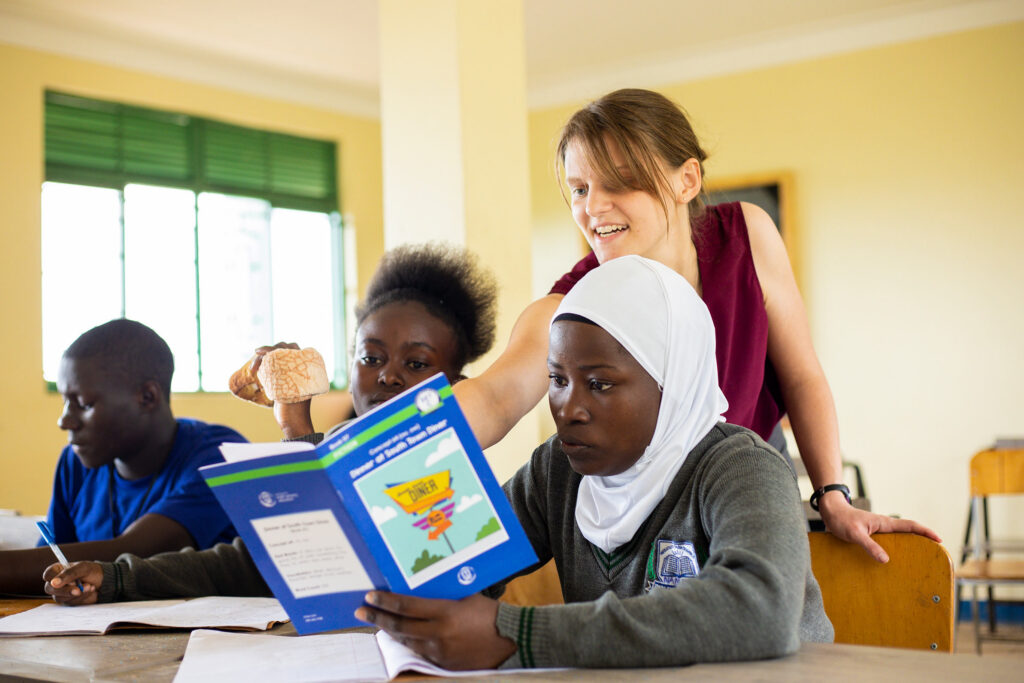
This support enabled teachers at The Levites Academy to receive professional learning rooted in Structured Literacy, an evidence-based approach that emphasizes explicit, systematic instruction in phonics, syllabication, and morphology.
For students in grades 7–12, this meant something radical: going back to the basics.
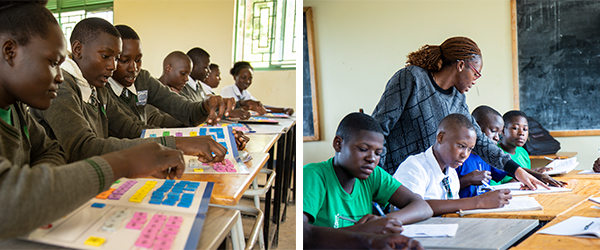
Instead of guessing at words or memorizing text, students began learning how sounds connect to symbols, how words break into syllables, and how meaning is constructed. Instruction shifted from compensating for gaps to addressing them directly.
For teachers, the impact was immediate. Professional development brought structure, clarity, and confidence into classrooms. Educators gained a shared language and consistent strategies they could apply across content areas. And the materials mattered, too. For many students, the IMSE decodable readers were the first books they had ever owned or held, a tangible signal that reading was for them.
More Than Reading Scores: A Cultural Transformation
The results at The Levites Academy go far beyond test scores. Students who once avoided reading aloud now decode words independently and with confidence. “Aha” moments happen daily as learners realize they can break words apart and make sense of them on their own. Comprehension has expanded, particularly with nonfiction texts, opening new windows into the world and strengthening students’ ability to learn across subjects.
Parents have taken notice, expressing urgency and gratitude for literacy support they never had access to themselves. Teachers consistently apply strategies to reinforce skills across classrooms and grade levels.
Perhaps most importantly, literacy has become a tool for empowerment, especially for girls. Reading is no longer just an academic requirement; it’s a pathway to health knowledge, opportunity, agency, and leadership.
A Model That Transcends Geography
The story of The Levites Academy is proof that evidence-based literacy instruction is not bound by geography. When educators are equipped with the right training, materials, and support—and when systems align to ensure that training is implemented with fidelity—transformation follows.
As Emily Wakabi emphasizes, sustainable literacy improvement doesn’t happen through isolated efforts. It happens when teachers receive high-quality, evidence-based training and school leaders align expectations, systems, and support so that instruction is delivered as intended.
The partnership between IMSE Corporate and the IMSE Foundation reflects this belief. By uniting resources, expertise, and mission, they are helping turn a 20-year dream into a daily reality for students who are now learning not just how to read, but how to imagine a different future. Because literacy isn’t just about learning to read; it’s about unlocking the ability to learn, lead, and thrive.
Learn more about the Levites Academy here.
Like what you read?
Follow us on Social Media:
