
Reading Intervention Strategies: From Research to Implementation


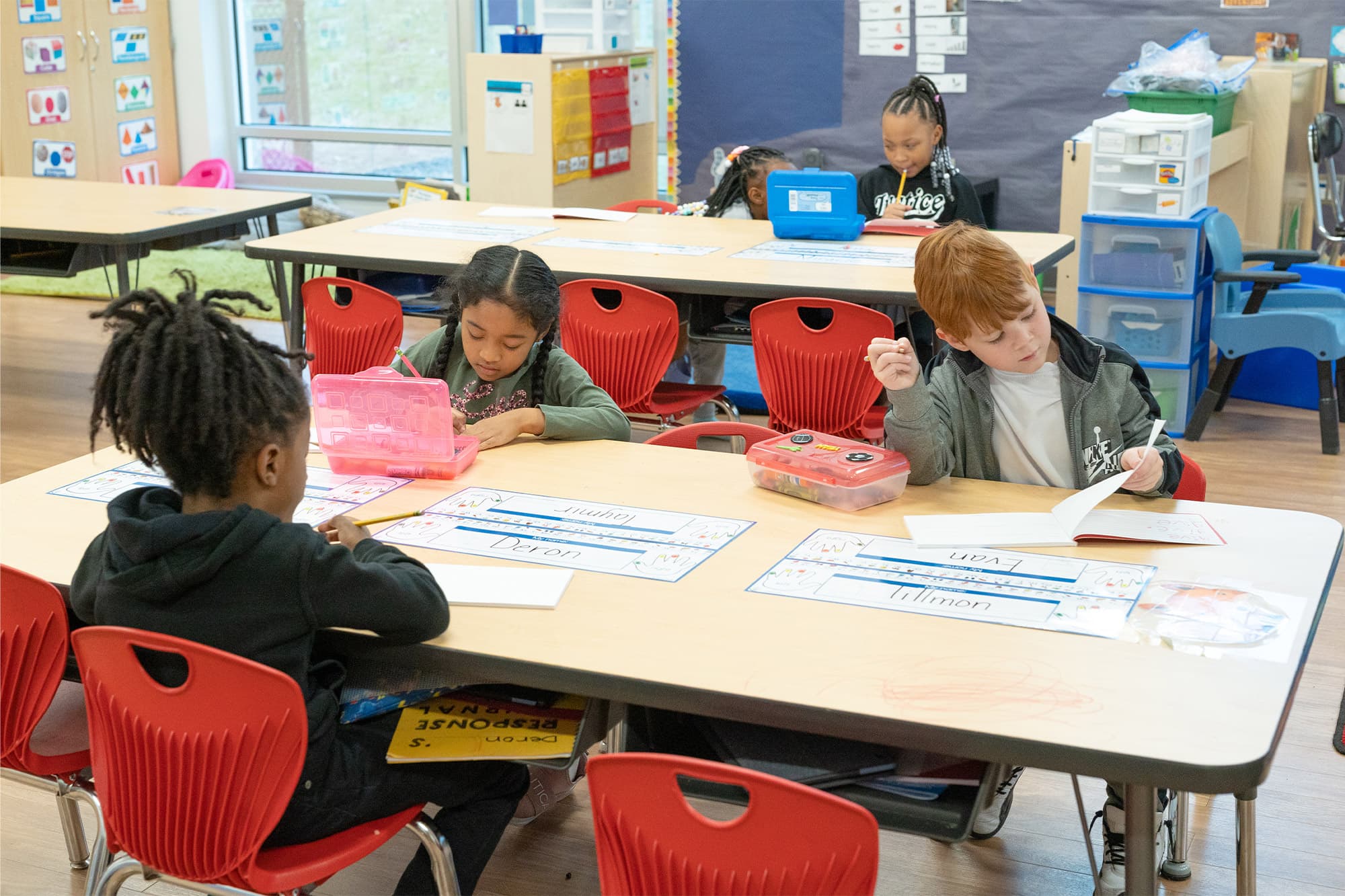
In 2022, the National Assessment of Educational Progress (NAEP) reported that 68% of children in fourth grade were struggling with reading and considered “not proficient readers”. As they get older and fall further behind, students’ reading challenges will impact them across the curriculum in all subjects, making it difficult for them to catch up.
Studies show that children who receive intervention in the earlier grades make greater gains and continue to develop skills at a faster rate post-intervention in comparison to students who received intervention in later grades. Reading intervention plays a critical role in promoting literacy by targeting gaps in struggling students’ reading skills, tailoring instruction to meet their needs, and monitoring their progress.
The Science of Reading and How Children Learn to Read
The science of reading is a vast body of research and knowledge that is based on the contributions of experts worldwide. This scientifically based information is not new and, in fact, represents over five decades of findings about how children learn to read.
The science of reading identifies the characteristics of effective instruction for each of the essential components of reading: phonological awareness, phonics and word recognition, fluency, vocabulary, oral language comprehension, and text comprehension. This science of reading research has proven that a structured literacy approach is the key to reading success.
The Orton-Gillingham approach is an example of an evidence-based, Structured Literacy approach that focuses on the individual strengths and needs of every student. It is based on a well-developed curriculum that is systematic, sequential, diagnostic, and cumulative. Using an explicit instruction model, it breaks down reading and spelling into smaller skills involving letters and sounds. Instruction begins with easier concepts and scaffolds upon learned skills to more advanced concepts, providing a solid foundation in literacy skills.
What Is the Structured Literacy Approach for Reading Interventions?
Structured Literacy is an umbrella term that the International Dyslexia Association adopted to refer to the many programs (like Orton-Gillingham) that teach reading by following the evidence and research behind the science of reading. Programs that exemplify the components and methods outlined in the term Structured Literacy are beneficial for all students and essential for those who struggle with reading. Structured Literacy is an approach that provides a framework to include both the principles (how we should teach) and the elements (what we should teach).
When we look at the elements of Structured Literacy, Gough and Tunmer’s Simple View of Reading can provide a snapshot of the two processes that are required for the student to achieve reading comprehension:
Decoding (word recognition) x Language Comprehension = Reading Comprehension
Dr. Hollis Scarborough’s well-referenced Reading Rope provides a research-based analogy that breaks down these two processes into sub-processes and skills, “woven” together to give a visual representation of how these skills and strategies are intertwined to lead to skilled reading. These skills include phonemic awareness, phonics and word recognition, fluency, vocabulary, oral listening and reading comprehension, and written expression.
Teachers need to have a solid understanding of the principles of Structured Literacy.
Explicit
During direct, explicit instruction, the teacher gives a clear explanation for each new concept. The introduction is followed by modeling and student application of the new concept. While the student applies new knowledge, the teacher provides guidance and specific feedback to promote errorless learning.
Systematic
The delivery of instruction follows a well-defined scope and sequence, which provides a logical progression of skills that move from simple to more complex.
Cumulative
Newly introduced concepts are layered upon previously learned concepts. The foundation of knowledge for phoneme-grapheme relationships, reliable spelling patterns, and generalization of rules is frequently reviewed to build automaticity.
Diagnostic/Responsive
Continuous formative assessment informs progress monitoring, allowing teachers to make data-based decisions to support targeted instruction and differentiation.
The Impact of Early Intervention on Long-term Success
Research has demonstrated that at-risk students can be accurately identified as early as kindergarten (Compton et al., 2006). It has also been established that early intervention in the early elementary grades can significantly reduce the number of students considered at-risk (McMaster et al., 2005; Torgesen, 2000). In fact, studies show that children who receive early intervention (in the earliest possible grade levels) continue to outperform their peers in word reading and other foundational skills that are necessary for proficient reading (Connor et al., 2013; O’Connor et al., 2014; Lovett et al., 2017; Wanzek et al., 2018). The use of effective assessments can help to identify at-risk students in early grade levels, inform instruction, monitor student progress, and make data-driven decisions.
What Are Evidence-Based Strategies for Reading Interventions?
A multi-sensory Structured Literacy approach applies evidence-based knowledge about how students learn. Explicit instruction simultaneously incorporates multiple senses (auditory, visual, and tactile-kinesthetic) to form stronger neural pathways in the brain, imprinting learning in long-term memory.
Explicit and Systematic Phonics Instruction
During explicit instruction, the teacher provides a clear and direct explanation of each new concept. The introduction is followed by teacher modeling and student practice of the new concept. Students are given multiple opportunities to apply what they have learned to reading, spelling, and writing, while the teacher offers guidance and specific feedback to support errorless learning. The instruction follows a well-organized scope and sequence, ensuring a logical progression of skills from simple to more complex.
Strategies for Building Reading Fluency
Students who struggle with decoding will also struggle to read text automatically and accurately. While reading, they exert a high amount of cognitive energy on word identification, making text comprehension difficult if not impossible. Direct, explicit instruction in word attack skills and vocabulary directly supports the development of reading fluency. For students to become proficient readers, they must have regular opportunities to practice fluency in a variety of ways:
- Choral or partner reading
- Teacher model (read-aloud)
- Prosody practice
As readers engage in deep and repeated reading, they begin to incorporate the prosodic elements that add meaning and expression to their words, like an actor adds character to a script. Rehearsal readings of Reader’s Theater scripts in the classroom are a fun and effective way to improve reading fluency.
Vocabulary and Comprehension Intervention Strategies
Vocabulary is pivotal to reading success. Research shows that students’ reading comprehension and overall success are strongly related to the breadth and depth of their vocabulary knowledge (Lehr et al., 2004). According to expert Timothy Rasinski, teaching vocabulary has many benefits, including positive outcomes in comprehension, writing, decoding, and overall intelligence. Teachers should make time for word analysis and syllabication activities to help students tackle multisyllabic words, thereby enhancing both decoding and comprehension of meaning.
1. Morphology
Focus on learning morphemes and affixes, the smallest units of a multisyllabic word that contain meaning. Increasing morphological awareness helps students to identify these units, understand their meanings, and learn about the structure of the English language.
2. Direct instruction
Harvest academic words and context words before, during, and after reading, using read-aloud novel studies and subject area content. Engaging students in activities that require them to use new words often and make personal connections supports memory (McKeown, 2019).
3. Word sort
Select a group of words to present to the class. Students can work in pairs or groups to 1) categorize words and then 2) select labels or categories for each group of words. This comprehension strategy is great for developing background knowledge.
4. Activating prior knowledge
Find out what students already know with a K-W-L chart or a thinking map.
5. Making connections
Encourage students to make text-to-self, text-to-text, or text-to-world connections throughout the reading journey.
6. Reciprocal Teaching
Actively engage students in the use of four strategies: predicting, questioning, clarifying, and summarizing before, during, and after reading to boost metacognition and reading comprehension skills. Studies have shown that this is highly effective for multilingual students (Ahmadi et al., 2012).
Implementing Reading Interventions in Different Settings
There is a misconception that Structured Literacy approaches, such as Orton-Gillingham, are designed specifically as an intensive intervention program to target dyslexia. The truth is, programs grounded in the science of reading research make reading more accessible for all children. When used in the classroom, a Structured Literacy approach can build a strong foundation in phonological awareness, phonics, fluency, vocabulary, comprehension, and writing. Evidence-based reading intervention strategies that align with the science of reading are appropriate for all tiers in a Multi-Tiered System of Supports (MTSS):
Tier 1: Classroom-Based Intervention Strategies
Tier 2: Small Group Intervention Approaches
Tier 3: One-on-One Intervention Techniques
Learn About Structured Literacy Reading Interventions With IMSE
As more teachers become skilled in implementing preventive and effective literacy interventions, we are witnessing several important changes with far-reaching effects. First, highly qualified teachers are being empowered to teach diagnostically, with assessment and progress monitoring tools that inform instructional decisions and customize instruction to meet the needs of all students. They are contributing to the early identification of dyslexia and other reading challenges. Additionally, Districts are engaging in a positive, collective impact on the number of students who will be able to read at grade level in the future.
IMSE has been empowering educators with professional literacy knowledge for years. Our Structured Literacy approach is grounded in the science of reading and designed for all tiers of instruction, helping educators deliver effective instruction to all students. Investing in literacy can change lives. IMSE provides the training, materials, and resources to get districts and teachers started.
Products for their classes: https://imse.com/products/
Training programs for educators: https://imse.com/training-descriptions/
Schoolwide or classroom online training: https://imse.com/private-district-trainings/
References:
Ahmadi, Mohammad & Pourhosein Gilakjani, Abbas. (2012). Reciprocal Teaching Strategies and Their Impacts on English Reading Comprehension. Theory and Practice in Language Studies.
Compton, D. L., Fuchs, D., Fuchs, L. S., & Bryant, J. D. (2006). Selecting at-risk readers in first grade for early intervention: A two-year longitudinal study of decision rules and procedures. Journal of Educational Psychology, 98(2), 394.
Connor, C. M., Morrison, F. J., Fishman, B., Crowe, E. C., Al Otaiba, S., & Schatschneider, C. (2013). A longitudinal cluster-randomized controlled study on the accumulating effects of individualized literacy instruction on students’ reading from first through third grade. Psychological Science, 24(8), 1408-1419.
Lehr, F., Osborn, J., & Hiebert, E.H. (2004). A focus on vocabulary. Honolulu, HI: Pacific Resources for Education and Learning.
Lovett, M. W., Frijters, J. C., Wolf, M., Steinbach, K. A., Sevcik, R. A., & Morris, R. D. (2017). Early intervention for children at risk for reading disabilities: The impact of grade at intervention and individual differences on intervention outcomes. Journal of Educational Psychology, 109(7), 889–914.
McKeown MG. Effective Vocabulary Instruction Fosters Knowing Words, Using Words, and Understanding How Words Work. Lang Speech Hear Serv Sch. 2019 Oct 10;50(4).
McMaster, K. N., Fuchs, D., Fuchs, L. S., & Compton, D. L. (2005). Responding to non-responders: An experimental field trial of identification and intervention methods. Exceptional Children, 71, 445-463.
O’Connor, R. E., Bocian, K. M., Sanchez, V., & Beach, K. D. (2014). Access to a responsiveness to intervention model: Does beginning intervention in kindergarten matter? Journal of Learning Disabilities, 47(4), 307-328.
Torgesen, J. K. (2000). Individual differences in response to early interventions in reading: The lingering problem of treatment resisters. Learning Disabilities Research and Practice, 15(1), 55-64.
Wanzek J, Stevens EA, Williams KJ, Scammacca N, Vaughn S, Sargent K. Current Evidence on the Effects of Intensive Early Reading Interventions. Journal of Learning Disabilities. 2018 Nov/Dec; 51(6):612-624.
Like what you read?
Follow us on Social Media:
