
The Future of Orton-Gillingham Is Not One-Size-Fits-All


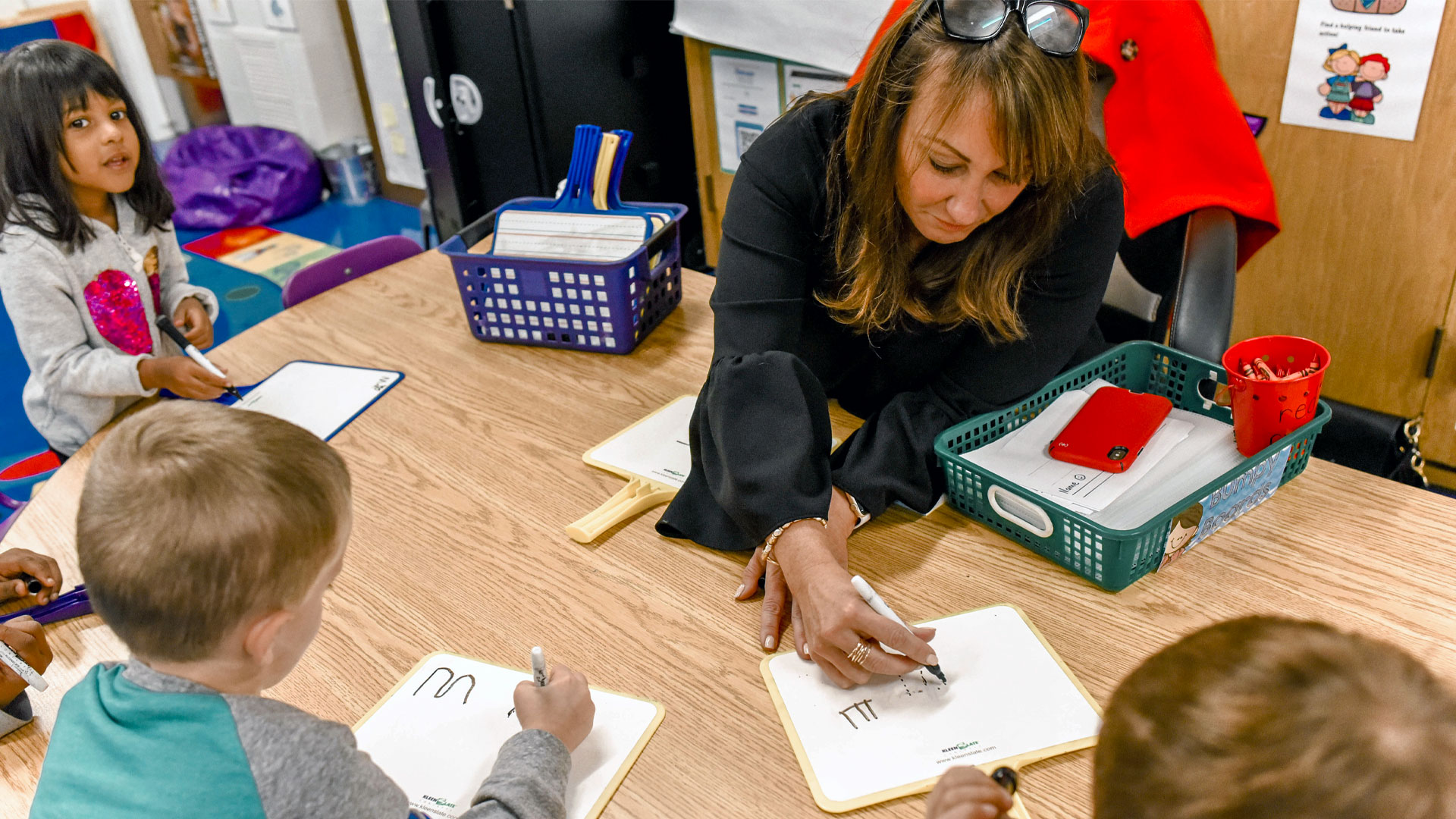
Orton-Gillingham (OG) has a branding problem. For many educators and district leaders, it’s still associated with a narrow set of assumptions: that it’s only for intervention, only for dyslexia, overly focused on phonics, or dependent on sand trays and other “multisensory” techniques. Those perceptions are still present, but they oversimplify both what OG is and what it has become, as well as the difference it can make for every student in the classroom.
At its core, Orton-Gillingham is an instructional approach grounded in explicit, systematic, and sequential teaching. It focuses on helping students understand the relationship between sounds and letters so they can read and write with confidence and accuracy. While that foundation is still important, what often gets lost is that OG is not a single, standardized program, and not every OG program is the same.
Treating all OG approaches as interchangeable is a mistake. It’s like assuming every sedan offers the same performance, safety features, and technology. The label may be the same, but what’s under the hood is entirely different. This distinction matters, especially as districts look for solutions that align with current research and classroom realities. For the best results, it is essential that district leaders carefully consider the breadth of OG options available to them to ensure they choose one that meets students’ needs and can be implemented with fidelity.
Modern implementations, like IMSE’s OG+, demonstrate how OG has evolved to reflect current research and classroom needs. While rooted in fundamental OG principles, IMSE’s OG+ has been adapted to expand as new research emerges. This instruction still prioritizes the fundamental pillars of OG, but it also incorporates structured phonemic awareness activities aligned with phonics concepts; fluency practice at the word, phrase, sentence, and passage level; “Morpheme Moments” correlated with multisyllabic word instruction, vocabulary instruction connected to decodable texts; and intentional opportunities for oral language development. These elements work together to support a more complete picture of how students learn to read, rather than isolating skills in ways that can limit impact.
Traditional OG did not always emphasize these components with the same level of clarity or consistency. IMSE has continued to refine OG+ based on both emerging research and direct classroom feedback, strengthening instructional routines and providing teachers with increasingly specific, actionable guidance. The result is a more cohesive and actionable approach in the classroom.
Implementation has evolved as well. Early OG models were often associated with one-on-one instruction, which contributed to the perception that it was only appropriate for intervention. That is no longer the case. IMSE’s approach is designed to work in one-on-one, small-group, and whole-class settings, making it a viable foundation for core instruction, not just targeted support.
IMSE has also expanded OG+ to better support today’s diverse classrooms. The curriculum provides guidance for differentiating instruction to meet the needs of all students, including enrichment as well as remediation, along with a variety of resources to strengthen learning for multilingual learners and students needing intervention.”
For district leaders, the takeaway is clear: The question is not whether OG has a place in modern literacy instruction, but how it is being implemented. Explicit, structured teaching benefits far more than a small group of struggling readers. In fact, research continues to show that most students rely on it to build strong literacy skills.
As literacy instruction continues to change, OG-based approaches should advance with it. IMSE’s OG+ reflects that commitment, pairing a science-based foundation with continuous refinement driven by research, classroom feedback, and measurable outcomes. Not all OG is the same, and for districts looking to improve student outcomes at scale, that distinction matters.
Like what you read?
Follow us on Social Media:
